How Precision Farming Technology Improves Yield and Reduces Waste
 By Soumava Goswami
23 April, 2026
Technology
Last Updated on: April 27th, 2026
By Soumava Goswami
23 April, 2026
Technology
Last Updated on: April 27th, 2026
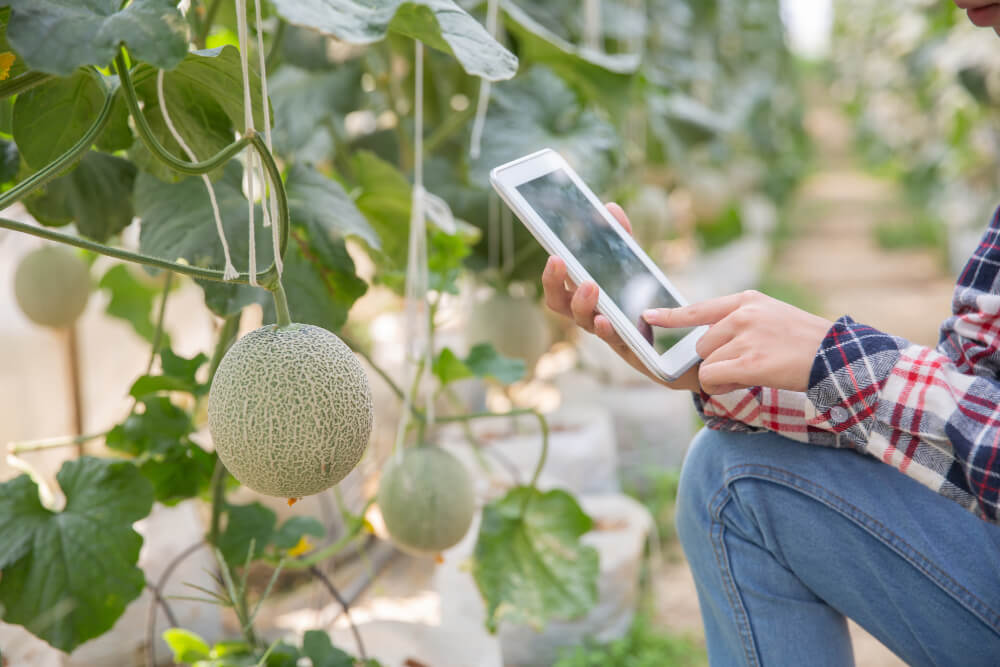
Agriculture is one of the oldest and most important pursuits in the history of the world, with evidence indicating that plants were first cultivated by humans as far back as 23,000 years ago. Since then, the science of agriculture has changed dramatically, with modern precision farming technology moving this ancient practice into the present.
In this post, we’ll discuss a few of the ways today’s farmers are adapting to the needs of our changing world. Thanks to the advent of precise data collection and automation technologies, farmers can now optimize resources and enhance efficiency to a greater degree than ever before. When these methods are combined, modern agricultural operations can produce greater yields while increasing environmental sustainability.
The Future of Farming
Many of the techniques currently employed by farms are thousands of years old, a reminder of the old adage, “If it ain’t broke, don’t fix it.” While innovations have taken place across the centuries (including some notable and revolutionary technologies, like the invention of the plow), the basics have remained the same: Crops must be planted in the correct soil to support them, and they must receive adequate water, sunlight, and nutrients to grow and thrive.
In recent decades, however, increasing populations and the changing climate have created new challenges for the world’s farms. Resources are becoming scarcer, while agriculture’s cumulative impact on the environment is becoming more and more pronounced. Farmers must now place a greater emphasis on reducing waste and improving yields, something that is only possible with the help of modern technology.
Drones Can Monitor Farming Conditions
Since the earliest days of agriculture, farmers have placed great importance on having detailed knowledge of their farms and the crops growing there. For millennia, the only way to do this was by surveying the fields directly and recording observations. Farmers would keep an eye on the health of their crops while also noting any irregularities in the land or soil. While effective, this method is limited by the fact that manually surveying land can only be done so quickly. Both crop health and land conditions can change, sometimes faster than surveyors can keep up.
Thanks to agricultural drones, surveying and monitoring of acres of farmland can now be done far more quickly and efficiently. Drones can provide a continuous stream of data, which can be sent in real time to farming software that interprets the data and assists farmers in making informed decisions about a variety of factors. For instance, monitoring can help farmers limit pesticide and fertilizer use, ensuring that these chemicals are only applied when and where needed. Data provided by drones can also aid farmers in both sowing and tillage, helping to streamline the processes and improve overall efficiency.
GPS-Guided Equipment Ensures Perfectly Accurate Planting
As we mentioned earlier in this article, the plow was one of the most important and revolutionary inventions in the history of agriculture. It allowed farmers to sow seeds with far greater speed and efficiency than ever before. This led to improved crop yields, a critical step for feeding a growing population and one that helped transform the ancient world. Further major innovations came with the arrival of steam- and, eventually, gasoline-powered tractors during the horseless farming revolution of the 1800s.
Now, GPS technology has once again revolutionized farming. The heavy equipment used on farms can now be guided entirely by satellite navigation, allowing seeds to be planted in the perfect location and at the perfect depth, every single time. This precision farming technology improves yields while also allowing for greater productivity during the tilling process.
Soil Sensors Help Farmers Optimize Water Usage
Another important innovation in the history of agriculture has been the ability to artificially irrigate crops. In the past, farmers have had to rely on seasonal rains to provide their produce with the necessary hydration. With that, an unexpectedly dry season could mean a deadly famine. Though this risk has been greatly reduced by the advent of sprinklers and other irrigation systems, traditional irrigation is now reaching the limit of its efficacy, as it is also plagued with inefficiencies that waste a great deal of water.
One method farmers have developed for reducing water waste on farms is the placement of sensors in the soil. Using electric currents to detect the amount of moisture that is present, these sensors can relay the exact amount of water needed to optimize growth at any given moment. If more water is needed, the irrigation system can provide it; if not, no additional water will be applied. This prevents the excessive drain on local resources that would otherwise occur.
Data-Driven Decision-Making Makes Farming More Sustainable
Today, the agricultural sector employs about one-quarter of the entire workforce on the planet: nearly a billion people worldwide. In the United States alone, there are nearly two million farms, employing millions of people in order to produce food for their local communities and the world at large. Even with all those farms and farmers, however, feeding the whole world is a massive challenge, and data-driven decision-making now plays a critical role in creating a sustainable future for agriculture across the world.
By using these tactics and others to collect as much data as possible, farmers can gain every advantage toward increasing their crop yields and reducing the environmental impact of their farms. Many of the farms working to feed their communities are small, local operations that are working the same soil their families have worked for generations, such as the potato farmers of Washington state.
Often, it is these small farms that are advancing the age-old science of farming by applying complex data to their growing operations. By combining cutting-edge science with ancient farming wisdom, they are leading the world into a sustainable and plentiful future.
More Resources: