Why Solar Panel Cleaning Matters and How to Do It Right
 By Barsha Bhattacharya
25 June, 2026
Blogging
By Barsha Bhattacharya
25 June, 2026
Blogging
Solar panels sit on thousands of roofs across Southern California. They turn sunlight into power that cuts electric bills and supports a cleaner lifestyle. Yet many owners forget one key step that keeps those panels working at full strength. Regular cleaning makes a real difference in how much energy your system produces. In dry areas like the Inland Empire, dust builds up fast and steals performance if you ignore it.
Dust, pollen, bird droppings, and fine grit from desert winds cover the glass surface over time. Even a thin layer blocks sunlight from reaching the cells inside. Studies show dirty panels can lose anywhere from 10 to 25 percent of their output in regions like ours. That adds up quickly. A system meant to generate 9,000 kilowatt hours a year might waste 1,800 or more if left uncleaned. At local electricity rates, you could throw away hundreds of dollars every year. One cleaning often pays for itself within months through higher production.
The Sun Gives Panels a Beating
The hot sun here makes things worse. Heat causes any buildup to bake on harder. Rain sometimes helps wash away loose dirt, but it often leaves behind mineral spots that create new problems. Those spots shade individual cells and reduce overall efficiency even more. In places near farms, new construction sites, or open desert, the need grows stronger.
Beyond money, clean panels last longer. Heavy buildup can create hot spots that damage cells over years. Acidic bird droppings eat away at protective coatings if they sit too long. Cleaning removes these threats and protects your investment. Many manufacturers even suggest regular maintenance to keep warranties valid. Skipping this step might shorten the life of your expensive system.
Interesting FAQ
One common question stands out for many new solar owners: How much production am I losing? The answer surprises people. According to Ryan’s Home Services website, “It varies, but 10 to 25% is typical for panels that haven’t been cleaned in a year or more. We’ve seen heavily dust-loaded systems testing under 70% of their rated output. The math on a wash usually pays for itself in a few months.”
Safety Gear You Must Wear on the Roof
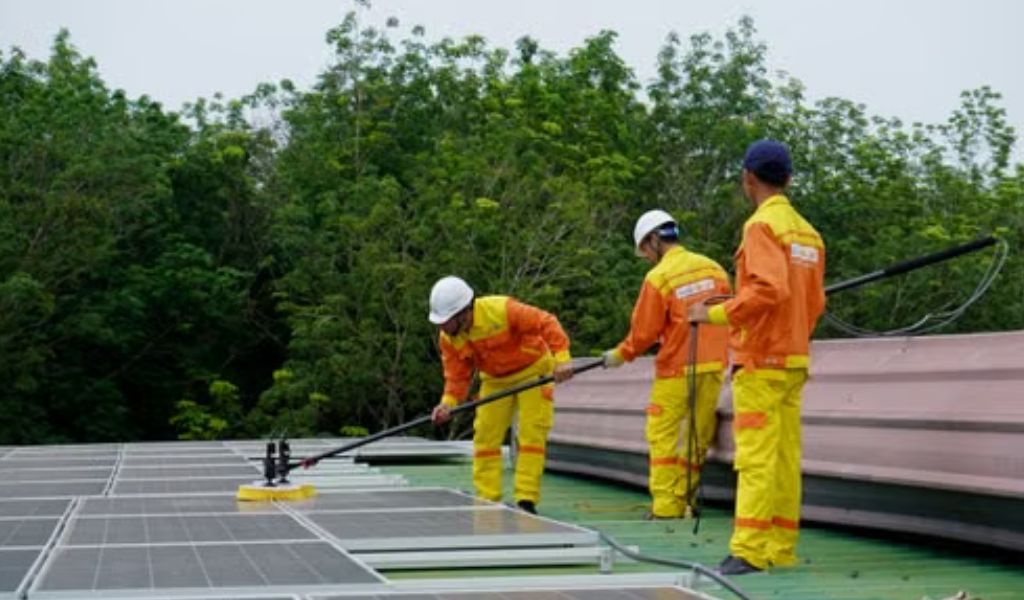
Cleaning solar panels often means working at heights. Safety comes first every single time. Never climb up without the right protection. Start with a sturdy harness and fall protection system anchored properly to the roof structure. This setup catches you if you slip and prevents serious injury. Wear non-slip shoes with good rubber soles for grip on tiles or shingles. Southern California roofs get hot and slick with morning dew or dust, so solid footing matters. Long pants and a long-sleeve shirt shield your skin from the sun and rough surfaces. Gloves give better hold on tools and protect your hands. Always use safety glasses to keep dust and water out of your eyes. A hard hat offers extra protection from any tools or debris that might fall. Bring a spotter on the ground who can hand you supplies and call for help if needed. Work only in cool parts of the day, early morning or late afternoon, to avoid heat exhaustion and prevent cold water from shocking hot panels. If you feel unsure about any part of the job, hire professionals who train for this work and carry insurance.
Proper Methods to Clean Solar Panels
The right technique keeps your panels safe while restoring their shine. Begin by turning off the system at the inverter for safety. Gather soft tools only. Use deionized or soft water because hard tap water leaves mineral spots that bake on in the sun. Avoid pressure washers at all costs. The strong spray can crack glass or force water into seals. Many experts recommend extension poles with soft-bristle brushes. Stand on the ground or roof edges when possible and reach across the array without stepping on panels. Never walk directly on them. The glass can crack, and the cells underneath may suffer hidden damage.
Mix a mild soap solution if needed, but plain soft water often works fine for light dirt. Gently brush from the top down in sections. Rinse thoroughly so no soap remains. Let the panels air dry naturally. Wiping with cloths might scratch the anti-reflective coating that helps them absorb more light. For ground-mounted systems, the job gets simpler. You reach everything from below with long tools. On roof arrays, use walking boards on tile roofs to spread your weight and protect the tiles. Work in small areas and rinse often to stop streaks. Professional crews follow these exact steps and check production numbers before and after to prove the results.
Homeowners sometimes try garden hoses from the ground, but this method rarely cleans the full surface well. It also risks using the wrong water type. Schedule cleaning once a year for most homes or twice if you live in a dustier spot. Check your inverter app regularly. A sudden drop in daily output often signals it is time for maintenance.
New Solar Roof Tiles and the Need for Cleaning
New solar roof tiles bring a fresh idea to home energy. Companies like Tesla make glass tiles that replace regular roofing material while generating power at the same time. These tiles blend in with your roof so the house keeps its classic look instead of showing bulky panels on top. They offer strong protection against the weather and come with long warranties, often around 25 years. Many homeowners in Southern California like the sleek style and the way the whole roof works as one big energy system.
Yet these modern tiles still collect dust, pollen, bird droppings, and mineral spots just like regular solar panels. Southern California’s dry air and desert winds cause buildup that blocks sunlight and lowers energy output. While some tiles have a textured surface meant to help rain wash away loose dirt, it rarely proves enough in our region. Heavy grime or baked-on spots can cut production by noticeable amounts over time. Experts recommend gentle cleaning once or twice a year to keep performance high and protect the tiles for the long run. Professional crews use soft brushes and pure water to avoid damage. In short, solar roof tiles look beautiful and work well, but they still need regular care to deliver full power year after year.
Solar panels represent a big step toward energy freedom, but they need basic care like any other part of your home. In Southern California, where the sun shines strongly, yet dust flies often, cleaning delivers clear rewards. You gain more power, save money, and extend equipment life. Whether you learn safe methods to do it yourself or call a local team, make it part of your yearly routine. Your system will thank you with steady, strong performance for years ahead.